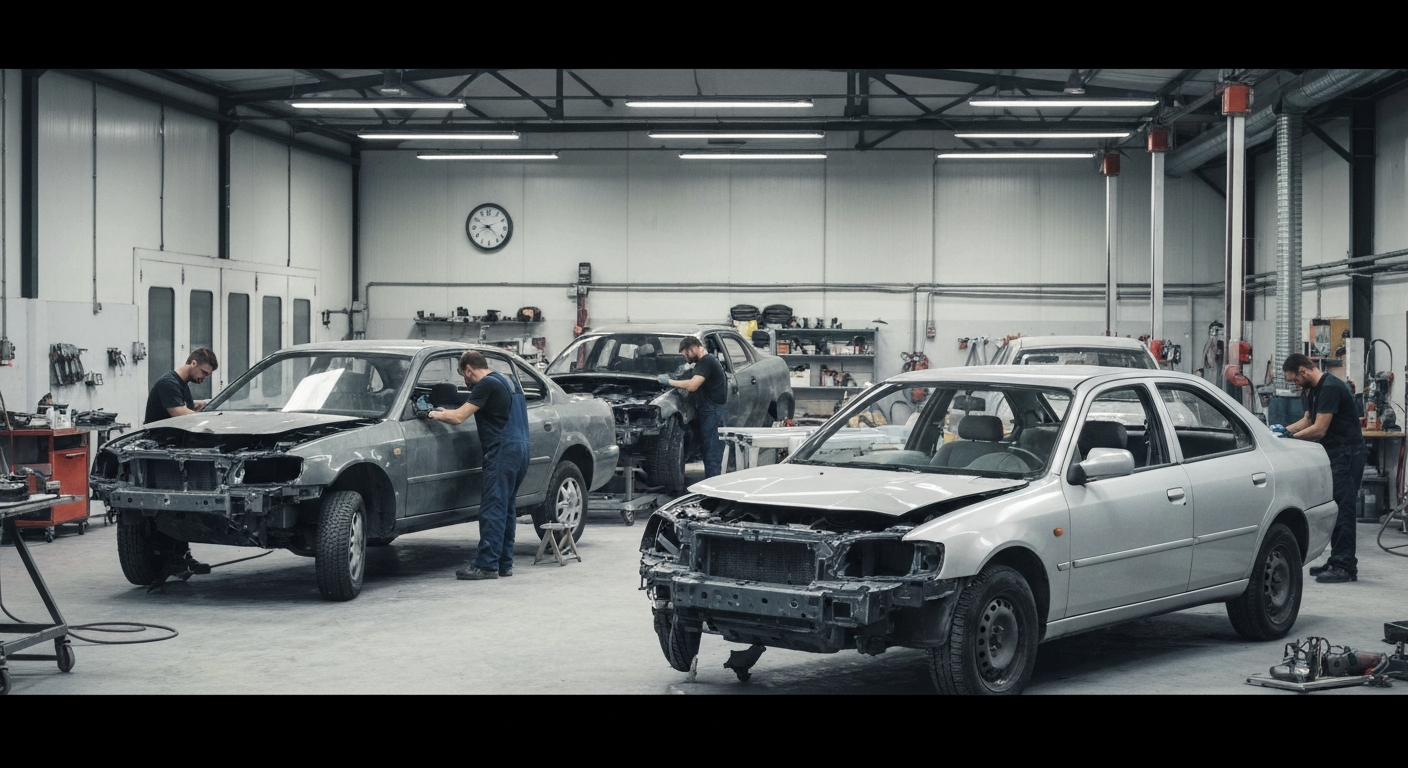
How Long Does Panel Beating Take? Repair Timeline Guide

Collision Coachworks Team
Expert Panel Beaters
One of the first questions Cape Town drivers ask when they book their car in for repairs is: how long does panel beating take? It's a fair question — you need your vehicle, and unexpected downtime affects your work, your family, and your pocket. The honest answer is that repair timelines vary significantly depending on the type and extent of damage, parts availability, and your panel beater's current workload. This guide breaks it all down so you know what to realistically expect.
Why Panel Beating Timelines Vary So Much
Unlike a tyre change or a service, panel beating is a precision craft that can't be rushed without compromising quality. Every job is unique — two cars with seemingly similar damage may take very different amounts of time to repair properly. Here's what drives that variation:
- Severity of structural damage — a small dent on a door is a world apart from a front-end collision that has bent the chassis
- Parts availability — imported or specialist parts for European vehicles like BMW, Audi, or Mercedes can take days or weeks to arrive
- Insurance assessment delays — if the job is going through insurance, the assessor needs to inspect the vehicle before work can begin
- Paint curing time — modern waterborne paints and clear coats require specific curing cycles that cannot be skipped
- Hidden damage — secondary damage behind panels often only becomes visible once the outer panels are removed
- Workshop capacity — a busy workshop in Parow Industria during peak holiday season may have longer lead times
Typical Repair Timelines by Damage Type
Here's a realistic breakdown of how long common repairs take at a professional panel beating workshop:
Minor Dents and Small Scratches (1–2 Days)
For light cosmetic damage — a small door ding, a shallow dent in a quarter panel, or a surface scratch that hasn't gone through to bare metal — most professional panel beaters can turn the job around in one to two working days. If the damage is suitable for paintless dent removal (PDR), some repairs can even be completed same-day.
However, if the paint needs to be colour-matched and resprayed, you're generally looking at a minimum of two days to allow for proper preparation, application, and initial curing of the clear coat.
Moderate Panel Damage (3–5 Days)
This category covers a wider range of common repairs: a crumpled bumper, a side-swiped door, a rear corner after a low-speed collision, or hail damage across multiple panels. The process typically involves:
- Stripping the affected panels and assessing underlying damage
- Straightening or replacing damaged panels using hydraulic equipment
- Applying body filler where needed and block sanding to restore the body line
- Priming, colour-matching, and respraying affected panels
- Clear coat application and final inspection
For popular South African vehicles like the VW Polo, Toyota Hilux, or Ford Ranger, replacement panels are often available locally, which keeps turnaround time tight. For less common or imported vehicles, parts sourcing can extend this timeline.
Front or Rear Collision Damage (5–10 Days)
A significant front or rear-end collision — the kind where airbags may have deployed, the radiator support is damaged, or bumper reinforcement beams are bent — requires a more comprehensive repair process. Structural components need to be measured on a chassis jig to ensure the vehicle is returned to factory tolerances before any cosmetic work begins.
At this level of repair, multiple panels are typically removed and either repaired or replaced. If the bonnet, front fenders, and bumper are all involved, each needs individual attention, and the colour blend across neighbouring panels requires careful spray work to achieve a seamless result.
Insurance assessments at this level can add 1–3 days to the timeline before repairs even begin.
Major Structural or Side-Impact Damage (2–4 Weeks)
Serious accidents involving chassis straightening, A-pillar or B-pillar repair, roof damage, or full side reshelling are in a different category entirely. This type of work requires specialist equipment, precision measurement, and in some cases, consultation with manufacturer specifications for high-strength steel and advanced high-strength steel (AHSS) components.
Vehicles like the BMW 3 Series, Mercedes C-Class, or Audi A4 have complex safety cell structures that must be repaired to exact standards to preserve passive safety in a future collision. Rushing this work is not an option — and any reputable workshop will not do so regardless of customer pressure.
The Insurance Assessment Factor
If your repair is going through a short-term insurance claim, the assessment process adds a layer of scheduling complexity. Here's the typical sequence:
- Vehicle drop-off at the panel beater
- Assessment appointment with the insurer's assessor — this can take 1–3 business days to schedule
- Authorisation from insurer before repairs begin — typically 1–2 business days after assessment
- Parts ordering if required — anywhere from same-day to 2 weeks depending on availability
- Actual repairs begin only after all of the above
This is why insurance jobs can sometimes feel slow — the panel beater is often waiting on external parties before they can start. At Collision Coachworks in Parow Industria, we work closely with most major South African insurers — including Outsurance, Discovery Insure, Santam, Hollard, and others — to streamline the authorisation process and minimise unnecessary delays.
Parts Availability in Cape Town: What to Know
Cape Town's geographic location at the tip of Africa means parts for some vehicles take longer to arrive than in Johannesburg or Durban. For common South African vehicles, local parts suppliers in Parow, Bellville, and the Northern Suburbs generally carry adequate stock. But for specialist vehicles, the chain looks like this:
- Japanese and Korean vehicles (Toyota, Hyundai, Kia, Nissan): Parts usually available within 1–3 days locally
- German premium vehicles (BMW, Mercedes, Audi, VW): OEM parts often need to be ordered from Johannesburg or imported, adding 3–7 days
- American vehicles (Ford Ranger uses South African-spec parts, generally available; other US-spec vehicles can be slower)
- Older vehicles (pre-2010): Panels may need to be sourced from breakers yards or fabricated, which takes longer
A good panel beater will order parts immediately upon receiving your vehicle (or even before, if they have clear photos of the damage), rather than waiting until the car arrives. This parallel processing can save several days on a job.
What You Can Do to Speed Up the Process
While much of the timeline is outside your control, there are steps you can take to avoid unnecessary delays:
- Report the claim immediately after an accident — insurers need time to schedule assessors
- Provide clear photos of all damage when booking — this allows the panel beater to pre-order parts
- Be reachable during business hours — panel beaters and insurers often need quick decisions or sign-offs
- Ask about a courtesy vehicle — many insurers provide one, which removes the daily pressure of needing your car back immediately
- Don't push for shortcuts — requesting that paint be rushed or that hidden damage be ignored may save time but will cost you in the long run
- Choose a workshop with good insurer relationships — this makes authorisations faster
How Collision Coachworks Manages Turnaround Time
At our workshop at 9 Assegaai Road, Parow Industria, we take a proactive approach to repair timelines. When your vehicle arrives, we conduct a thorough initial assessment — including checking behind panels for hidden damage — before providing you with a realistic timeline estimate.
We maintain relationships with parts suppliers across the Northern Suburbs and beyond, and we work with all major insurers to get authorisations processed efficiently. For clients in Bellville, Goodwood, Brackenfell, Durbanville, and surrounding areas, we can arrange collection and delivery to minimise the inconvenience of being without your vehicle.
Our spray booth environment is temperature- and humidity-controlled, which means paint jobs cure correctly the first time — no rework, no delays caused by environmental factors.
Summary: Realistic Timelines at a Glance
- Minor cosmetic damage: 1–2 days
- Moderate single-panel damage: 3–5 days
- Multi-panel or front/rear collision: 5–10 days
- Major structural damage: 2–4 weeks
- Add insurance processing time: typically 2–5 additional business days
These are general guidelines — your specific repair may fall outside these ranges depending on parts, damage complexity, and workshop capacity.
Get an Honest Timeline Before You Book
One of the most frustrating experiences in the panel beating industry is being told a job will take three days and then collecting your car two weeks later. At Collision Coachworks, we believe in setting realistic expectations upfront. If a repair is going to take ten days, we'll tell you that on day one — not day nine.
Contact us at 9 Assegaai Road, Parow Industria for a free assessment and an honest turnaround estimate. Whether you're coming from Parow, Bellville, Goodwood, or anywhere else in the Cape Town Northern Suburbs, we'll give you a clear picture of how long panel beating will take for your specific vehicle and damage — with no surprises.
Share Article
Need Expert Advice?
Get personalized consultation from our master technicians.
Related Articles
Panel Beaters in Parow: Why Location Matters for Quality Repairs
Why location matters when choosing panel beaters Parow drivers trust. Compare workshop capability, turnaround, insurance handling, and Northern Suburbs access from Collision Coachworks in Parow Industria.
Paintless Dent Removal vs Traditional Panel Beating: Which Is Right for You?
Compare paintless dent removal vs panel beating for Cape Town cars. Learn costs in ZAR, timelines, when PDR works, and when traditional repair is essential.
Electric Vehicle Body Repair: New Challenges for Panel Beaters (2026 Update)
Electric vehicle body repair panel beating brings high-voltage safety, aluminium structures, and specialised adhesives that traditional workshops must master. Here is what Cape Town EV owners should know in 2026.